Best Fluffy Vegan Pancakes – Light, Airy & Better Than Traditional
Introduction
There’s something magical about waking up to a stack of golden, fluffy vegan pancakes on a lazy weekend morning. The sizzle as the batter hits the hot griddle, the sweet aroma filling your kitchen, and that first bite revealing impossibly light, cloud-like texture – it’s pure breakfast bliss. These vegan pancakes prove you don’t need eggs or dairy to create the perfect stack. In fact, they’re so delicious that even devoted traditional pancake lovers won’t believe they’re plant-based.
What makes these vegan pancakes truly special is their incredible fluffiness and tender crumb. Using a clever combination of plant-based milk, apple cider vinegar, and baking powder, you create a chemical reaction that produces those beautiful air pockets that make pancakes irresistibly light. The recipe comes together in just 15 minutes using simple pantry ingredients, and the result rivals any diner-style pancake you’ve ever tasted. Whether you top them with maple syrup and fresh berries or keep it classic with just vegan butter, these pancakes deliver satisfaction in every bite.
The beauty of this recipe lies in its foolproof simplicity and versatility. You can whip up a batch on busy weekday mornings or make them special for weekend brunch. Add chocolate chips for the kids, fold in blueberries for a fruity twist, or keep them plain for that classic pancake experience. Best of all, they stay fluffy and tender even when reheated, making them perfect for meal prep.
Cultural Background and Context
Pancakes have been a breakfast staple across cultures for centuries, with variations appearing in nearly every cuisine worldwide. In America, thick, fluffy pancakes became popular in the early 20th century with the rise of chemical leavening agents like baking powder and baking soda. These innovations allowed home cooks to create tall, cake-like pancakes without the need for yeast or extensive beating of eggs. By the 1950s, pancakes had become synonymous with American breakfast culture, appearing in diners, restaurants, and home kitchens across the country.
Traditional pancake recipes relied heavily on eggs for structure and buttermilk for tang and tenderness. However, the vegan movement has revolutionized pancake-making by discovering that plant-based ingredients can replicate these functions perfectly. The acidity of vinegar or lemon juice curdles plant milk to create “vegan buttermilk,” while baking powder provides the lift that eggs traditionally offered. The result is pancakes that are actually lighter and fluffier than many egg-based versions, proving that sometimes plant-based alternatives aren’t just substitutes – they’re improvements. Today’s vegan pancakes represent both culinary innovation and a return to simpler, more accessible ingredients.
Health Benefits
Cholesterol-Free Breakfast: Unlike traditional pancakes made with eggs and dairy, vegan pancakes are completely cholesterol-free, making them a heart-healthy breakfast option. By eliminating animal products, you’re reducing saturated fat intake while still enjoying a satisfying, delicious meal. This makes vegan pancakes an excellent choice for anyone managing cholesterol levels or following a heart-healthy diet.
Easier Digestion: Many people struggle with lactose intolerance or dairy sensitivities that can cause bloating, gas, and discomfort. Vegan pancakes eliminate these concerns entirely by using plant-based milk, making them easier on your digestive system. You can enjoy a hearty breakfast without the digestive distress that dairy products might cause.
Lower in Calories: A serving of three vegan pancakes contains approximately 280-320 calories, generally lower than traditional pancake recipes that use whole eggs, butter, and whole milk. This makes them a more figure-friendly option when you’re watching your calorie intake but still want a satisfying breakfast. The difference becomes even more significant when you consider that the plant-based versions often keep you fuller longer.
Complex Carbohydrates for Energy: The flour in these pancakes provides complex carbohydrates that break down slowly, offering sustained energy throughout your morning. Unlike sugary breakfast cereals that cause energy spikes and crashes, these pancakes fuel your body steadily. Pair them with protein-rich toppings like nut butter for an even more balanced, energizing meal.
Customizable Nutrition: The beauty of vegan pancakes is how easily you can boost their nutritional profile. Add ground flaxseed or chia seeds for omega-3 fatty acids and fiber. Use whole wheat flour for added nutrients and fiber. Fold in fresh fruit for vitamins and antioxidants. Each modification enhances the health benefits while maintaining that fluffy texture everyone loves.
Plant-Based Protein: When made with soy milk or other protein-rich plant milks, these pancakes provide quality plant protein. A three-pancake serving offers approximately 6-8 grams of protein, which increases significantly if you add toppings like nut butter, hemp seeds, or plant-based protein powder to the batter.
Bone-Building Calcium: Most plant-based milks are fortified with calcium, often providing as much or more than dairy milk. One serving of vegan pancakes made with fortified plant milk can provide 15-20% of your daily calcium needs, supporting bone health and muscle function.
Calorie and Macronutrient Information: Each medium pancake (based on ¼ cup batter) contains approximately 95-110 calories, making it easy to portion according to your needs. A typical three-pancake serving provides around 45-50g carbohydrates, 7-9g fat, and 6-8g protein, creating a reasonably balanced breakfast before adding toppings.
Ingredients
For the Vegan Pancakes (Makes 10-12 medium pancakes, serves 3-4):
Dry Ingredients:
- 1½ cups (190g) all-purpose flour
- 2 tablespoons granulated sugar
- 2 teaspoons baking powder
- ½ teaspoon baking soda
- ¼ teaspoon salt
Wet Ingredients:
- 1¼ cups (300ml) unsweetened plant-based milk (soy, almond, or oat)
- 1 tablespoon apple cider vinegar or lemon juice
- 2 tablespoons vegetable oil or melted coconut oil
- 1 teaspoon vanilla extract
For Cooking:
- Vegan butter or coconut oil for the pan
For Optional Mix-Ins:
- ½ cup (90g) fresh or frozen blueberries
- ⅓ cup (60g) vegan chocolate chips
- ¼ cup (30g) chopped pecans or walnuts
- 1 teaspoon ground cinnamon
- ½ teaspoon pumpkin pie spice
For Serving:
- Vegan butter
- Pure maple syrup
- Fresh berries (strawberries, blueberries, raspberries, blackberries)
- Sliced bananas
- Powdered sugar
- Coconut whipped cream
- Nut butter (almond, peanut, cashew)
- Chopped nuts
- Vegan chocolate chips
Instructions
Step 1: Create Your Vegan Buttermilk
In a medium bowl or large measuring cup, combine the plant-based milk and apple cider vinegar. Stir gently and let the mixture sit for 5-7 minutes while you prepare the other ingredients. You’ll notice the milk will curdle slightly and thicken – this is exactly what you want. This vegan buttermilk creates the tangy flavor and tender texture that makes these pancakes special. The acidity is crucial for activating the leavening agents and creating maximum fluffiness, so don’t skip this step.
Step 2: Mix Your Dry Ingredients
In a large mixing bowl, whisk together the flour, sugar, baking powder, baking soda, and salt. Whisk thoroughly for at least 20-30 seconds to ensure the leavening agents are evenly distributed throughout the flour. This prevents pockets of baking powder or soda that could create uneven rising or bitter spots. Breaking up any clumps now makes mixing easier later and results in smoother batter. The flour should look uniformly white with no visible lumps.
Step 3: Combine Wet Ingredients
Add the vegetable oil and vanilla extract to your curdled plant milk mixture. Whisk these wet ingredients together until well combined and slightly frothy. The oil should be at room temperature so it mixes smoothly without forming clumps. If using melted coconut oil, ensure it’s just warm, not hot, or it could cook the batter or re-solidify when it hits the cold milk. The vanilla adds depth of flavor that elevates these pancakes from good to exceptional.
Step 4: Mix Wet and Dry Together
Create a well in the center of your dry ingredients and pour in the wet mixture all at once. Using a wooden spoon or rubber spatula (not a whisk at this stage), gently fold the ingredients together with broad, sweeping motions. Mix only until the flour is just moistened – you should still see small lumps throughout the batter. This takes about 10-15 gentle folds. Overmixing develops gluten and creates tough, dense pancakes instead of light, fluffy ones. The batter should be thick but pourable, similar to cake batter.
Step 5: Rest the Batter
Let your batter rest for 5-10 minutes at room temperature. This crucial step allows the flour to fully hydrate, the gluten to relax, and the leavening agents to begin working. You’ll notice the batter will thicken slightly and may develop some bubbles on the surface – these are good signs indicating your leavening is activated. During this rest, the baking powder creates the air pockets that will make your pancakes fluffy. Use this time to preheat your pan and prepare your toppings.
Step 6: Preheat Your Pan Properly
Heat a non-stick skillet or griddle over medium heat for 2-3 minutes. Proper temperature is crucial for perfect pancakes. Test if your pan is ready by sprinkling a few drops of water on the surface – they should sizzle and evaporate within 2-3 seconds. Too hot and pancakes burn outside while staying raw inside; too cool and they spread too thin and turn out dense. Add a small amount of vegan butter or oil, just enough to lightly coat the surface. Wipe excess with a paper towel – you want the thinnest layer possible.
Step 7: Pour and Shape the Pancakes
Using a ¼-cup measuring cup or ladle, pour batter onto the preheated pan, spacing pancakes about 2 inches apart to allow for spreading. Don’t spread the batter with your spoon – let it naturally form a circle for the most even cooking. The pancakes should hold their shape well; if they spread too thin, your batter may need a few more minutes to rest and thicken. You should see small bubbles forming on the surface almost immediately, indicating the leavening is working properly.
Step 8: Watch for Bubbles and Flip
Cook the first side for 2-3 minutes, watching carefully for the moment when bubbles begin forming on the surface and the edges look dry and set. When most bubbles have popped and the surface appears mostly matte rather than wet and shiny, it’s time to flip. This timing is critical – too early and the pancake falls apart; too late and you get a dark, overcooked bottom. Use a wide spatula and flip confidently in one smooth motion. The first side should be deep golden brown.
Step 9: Cook the Second Side
The second side cooks much faster than the first, usually only 1-2 minutes. You’re looking for even golden-brown color matching the first side. Press gently on the center with your spatula – if it springs back, it’s done; if it leaves an indentation, give it another 30 seconds. Transfer cooked pancakes to a plate and cover loosely with foil to keep warm while you cook the remaining batter. Add a small amount of butter or oil to the pan between batches to prevent sticking.
Step 10: Serve Immediately
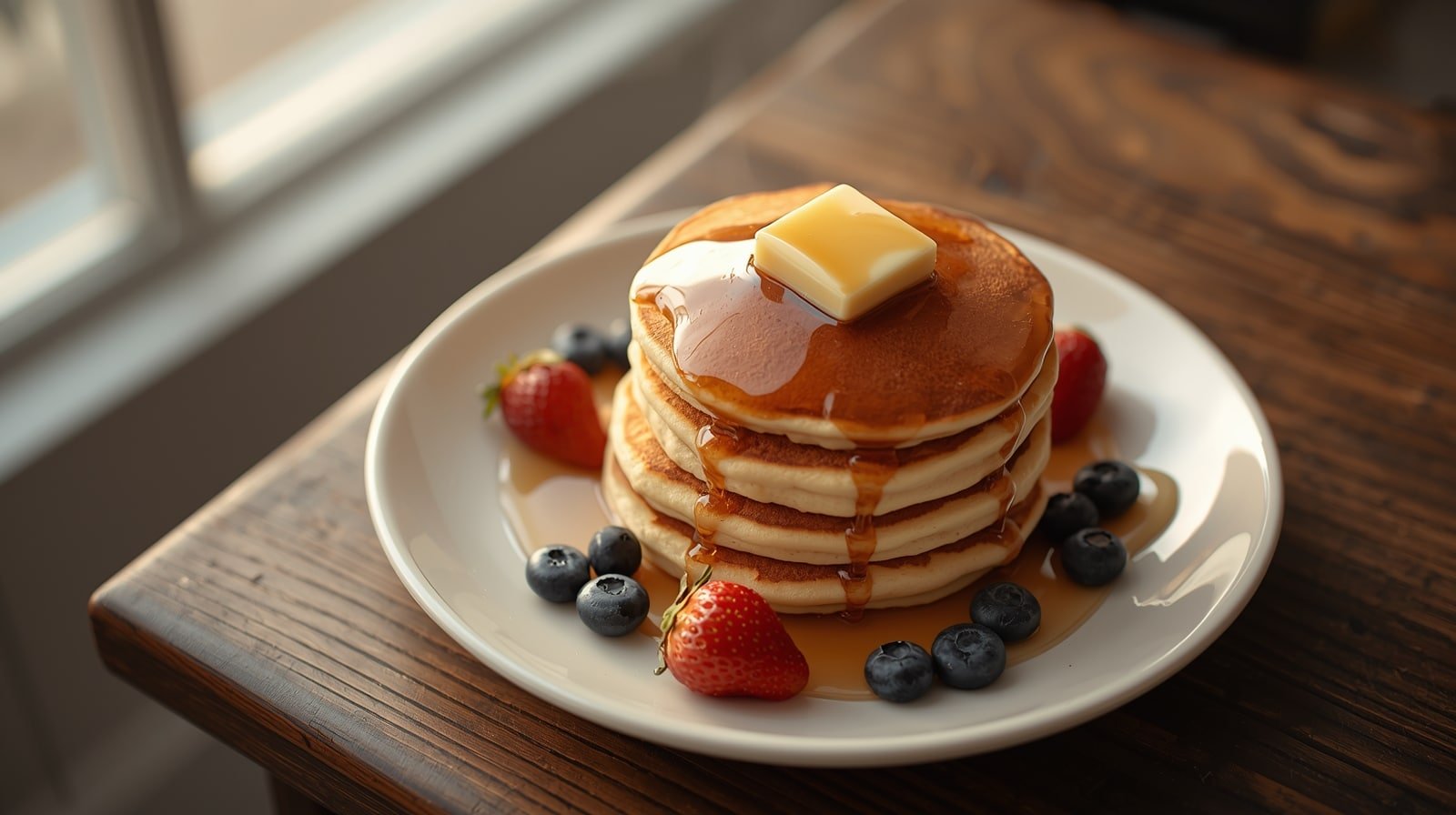
Stack the hot pancakes on plates, adding a pat of vegan butter between each layer so it melts into every pancake. Drizzle generously with warm maple syrup and add your favorite toppings. Fresh fruit adds brightness and nutrition, powdered sugar creates a beautiful presentation, and nut butter provides protein and healthy fats. Serve immediately while the pancakes are at their peak fluffiness and enjoy every bite of these cloud-like breakfast delights!
Ingredient Deep Dive
The choice of plant-based milk significantly impacts both flavor and texture in vegan pancakes. Soy milk creates the richest, most dairy-like pancakes due to its high protein content (6-8g per cup), which provides structure and helps the pancakes brown beautifully. The protein also contributes to that satisfying, slightly custardy interior texture. Oat milk produces slightly sweeter pancakes with excellent fluffiness and a mild, pleasant flavor that complements toppings well. Almond milk creates lighter pancakes with a subtle nutty undertone – perfect if you prefer less rich pancakes. Coconut milk from a carton (not canned) adds gentle tropical sweetness and creates incredibly tender pancakes. Whatever you choose, always use unsweetened and unflavored varieties for best results.
The type of oil you use also affects the final result. Neutral-flavored oils like vegetable, canola, or refined coconut oil allow the vanilla and natural pancake flavors to shine through. Melted vegan butter creates richer pancakes with that classic buttery taste everyone loves. Unrefined coconut oil adds a hint of tropical flavor that pairs beautifully with fruit toppings. For oil-free pancakes, substitute unsweetened applesauce, though the texture will be slightly different – less crisp on the edges but still fluffy and delicious. Each fat option creates unique results, so experiment to discover your favorite.
The combination of baking powder and baking soda isn’t redundant – each serves a specific purpose. Baking powder provides most of the lift, creating those air pockets that make pancakes fluffy. Baking soda reacts with the acidic “buttermilk” to create additional lift and helps the pancakes brown beautifully, giving them that golden color and slightly crispy edges. Using both ensures maximum fluffiness and perfect texture. Always check expiration dates on these leavening agents – old baking powder or soda won’t create proper rise, resulting in flat, dense pancakes.
Customization Options
Fruit-Filled Variations
Transform basic pancakes into fruity delights by adding fresh or frozen berries directly to the batter or onto individual pancakes as they cook. For blueberry pancakes, gently fold ½ cup blueberries into the batter just before cooking, or sprinkle a few berries onto each pancake immediately after pouring batter onto the griddle. Frozen berries work beautifully and don’t require thawing – they’ll bleed less color into the batter. Diced strawberries, raspberries, or blackberries also work wonderfully. For banana pancakes, mash one ripe banana and add it to the wet ingredients, or place thin banana slices onto pancakes as they cook for pockets of caramelized banana sweetness.
Chocolate and Sweet Variations
Create chocolate chip pancakes by folding ⅓ cup vegan chocolate chips into the batter or sprinkling them onto each pancake right after pouring. The chips will melt slightly, creating pockets of gooey chocolate throughout. For double chocolate pancakes, add 2 tablespoons cocoa powder to the dry ingredients and fold in chocolate chips. Make cinnamon roll pancakes by adding 1 teaspoon cinnamon to the batter, then swirl 2 tablespoons melted coconut sugar with ½ teaspoon cinnamon onto each pancake as it cooks. For birthday cake pancakes, add ½ teaspoon almond extract and 2 tablespoons rainbow sprinkles to the batter for a festive, celebratory breakfast.
Serving Suggestions
The classic presentation for vegan pancakes involves stacking three to four pancakes high on individual plates, placing a generous pat of vegan butter on top to melt down the sides, and drizzling with warm pure maple syrup. But there are countless ways to elevate this breakfast staple. Create a fruit compote by simmering fresh or frozen berries with a touch of maple syrup and lemon juice for 5 minutes, then spoon over pancakes for restaurant-quality presentation. Make a banana foster topping by caramelizing sliced bananas in vegan butter and brown sugar, adding a splash of rum extract for sophistication.
For a protein-packed breakfast, spread each pancake with almond or peanut butter before stacking, creating layers of nutty richness throughout. Top with sliced bananas and a drizzle of maple syrup for a combination that’s both indulgent and nutritious. Create a pancake parfait by cutting pancakes into quarters, layering them in a glass with vegan yogurt, granola, and fresh berries for a beautiful breakfast or brunch presentation. For special occasions, make pancake skewers by cutting pancakes into quarters, threading them onto skewers alternating with strawberries and banana slices, then drizzling with chocolate sauce or maple syrup.
Beverage pairings enhance the pancake experience. Classic choices include freshly brewed coffee, orange juice, or cold plant milk. For brunch, try mimosas or bellinis made with vegan prosecco. Chai lattes or golden milk provide warming spice notes that complement the pancakes beautifully. Herbal teas like chamomile or peppermint offer lighter options. For kids, chocolate plant milk or fruit smoothies make the meal extra special.
Variations
Once you’ve mastered the basic recipe, endless creative variations await. For pumpkin spice pancakes, replace ¼ cup plant milk with pumpkin puree and add 1 teaspoon pumpkin pie spice to the dry ingredients. These autumn-flavored pancakes are perfect for fall mornings and pair beautifully with pecans and maple syrup. Create lemon poppy seed pancakes by adding 1 tablespoon poppy seeds and 1 tablespoon lemon zest to the batter, then serve with lemon glaze made from powdered sugar and lemon juice.
Make protein pancakes by replacing ¼ cup flour with vanilla plant-based protein powder and adding an extra 2 tablespoons plant milk to maintain proper consistency. These create a more substantial breakfast that keeps you fuller longer. For savory pancakes, omit the sugar and vanilla, add ½ teaspoon garlic powder and 2 tablespoons nutritional yeast to the batter, then fold in chopped spinach and diced tomatoes. Serve these with avocado and hot sauce for a completely different pancake experience.
Buckwheat pancakes offer earthy, nutty flavor and are naturally gluten-free when using certified gluten-free buckwheat flour. Replace half the all-purpose flour with buckwheat flour for heartier pancakes with more complex flavor. Whole wheat pancakes provide extra fiber and nutrients – substitute half or all of the white flour with whole wheat for denser, more substantial pancakes. For banana oat pancakes, blend 1 cup oats in a blender to make oat flour, use this to replace 1 cup of the all-purpose flour, and add one mashed ripe banana to the wet ingredients.
Storage and Meal Prep
Leftover vegan pancakes are a meal prep dream, reheating beautifully while maintaining their fluffy texture. Let pancakes cool completely to room temperature, then stack them with small squares of parchment paper between each one to prevent sticking. Store in an airtight container in the refrigerator for up to 5 days. To reheat, pop them in the toaster for 1-2 minutes until warmed through and slightly crispy on the edges, or microwave for 20-30 seconds until hot.
For longer storage, freeze pancakes for up to 3 months. Arrange cooled pancakes in a single layer on a baking sheet and freeze for 1-2 hours until solid, then transfer to a freezer bag or container. This flash-freezing prevents them from sticking together. To reheat from frozen, toast for 2-3 minutes or microwave for 45-60 seconds. Frozen pancakes make rushed weekday mornings infinitely easier – just grab what you need and heat while you get ready.
For ultimate meal prep efficiency, dedicate 30 minutes on Sunday to making a triple or quadruple batch. Store portions in individual containers or freezer bags with your favorite toppings packed separately. You’ll have homemade pancake breakfasts ready all week with minimal morning effort. Consider making different flavored batches – plain, blueberry, and chocolate chip – for variety throughout the week.
Common Mistakes to Avoid
Skipping the Buttermilk Step: Not letting your plant milk curdle with vinegar is one of the biggest mistakes. This step creates the tang and acidity needed for proper leavening and tender texture. Without it, pancakes will be dense and flat. Always allow the full 5-7 minutes for the mixture to properly curdle and thicken.
Using Too Hot Pan: The most common mistake is cooking pancakes over high heat, which burns the outside while leaving the inside undercooked. Medium heat is essential – it takes a few more minutes but produces evenly cooked, golden pancakes with fully cooked centers. If your first pancake is too dark, lower the heat before continuing.
Overmixing the Batter: Vigorously stirring or whisking the batter once wet and dry ingredients are combined develops excess gluten, creating tough, rubbery pancakes with tunnels throughout. Mix gently just until flour disappears. Those lumps you see will disappear during cooking, so resist the urge to beat them smooth.
Flipping Too Early: Impatience leads to broken, misshapen pancakes. Wait until you see bubbles forming on the surface and the edges looking set and dry. If you flip too soon, the unset batter will run and create a mess. Trust the visual cues – they’re more accurate than timing.
Not Resting the Batter: Immediately cooking batter without the 5-10 minute rest period results in thinner, less fluffy pancakes. The rest allows flour to hydrate, leavening to activate, and batter to thicken. This seemingly small step makes a dramatic difference in the final texture.
Wrong Consistency: Batter that’s too thick creates dense, cake-like pancakes; too thin creates crepes. The correct consistency is thick yet pourable – similar to cake batter. If needed, adjust with small amounts of flour or milk to achieve proper thickness.
Using Old Leavening Agents: Expired baking powder or baking soda won’t create proper rise, resulting in flat, disappointing pancakes. Test your baking powder by mixing ½ teaspoon with 2 tablespoons hot water – it should bubble vigorously. If not, replace it before making pancakes.
Shopping Guide
Nearly all ingredients for vegan pancakes are everyday staples available at any grocery store, making this an accessible recipe. All-purpose flour is found in the baking aisle – any brand works well, though unbleached flour produces slightly better flavor. For the best results with minimal price difference, choose King Arthur or Bob’s Red Mill. Store flour in an airtight container in a cool, dry place for up to 8 months.
Plant-based milk options are typically found in the refrigerated section or shelf-stable milk aisle. Popular brands include Silk, Oatly, Califia Farms, and store brands that are often equally good quality at lower prices. Always choose unsweetened, unflavored varieties for this recipe. A 32-ounce carton costs $3-5 and will make 3-4 batches of pancakes.
Baking powder and baking soda are essential leavening agents found in the baking aisle. These are inexpensive (typically under $3) and last for months when stored properly. Check expiration dates and write the opening date on the container – baking powder stays effective for about 6 months once opened, baking soda for about a year. Apple cider vinegar is found with cooking vinegars and oils – Bragg is a popular organic brand, but any apple cider vinegar works perfectly.
For special additions like vegan chocolate chips, look for dairy-free options in the baking aisle. Enjoy Life brand is allergen-free and widely available. Lily’s offers stevia-sweetened chips for lower sugar options. Many store brands now offer vegan chocolate chips at competitive prices. Fresh berries can be pricey, so frozen berries from the freezer section provide excellent value and work beautifully in pancakes year-round.
Nutritional Information (Per Serving)
- Prep Time: 10 minutes
- Cook Time: 15 minutes
- Total Time: 25 minutes
- Servings: 10-12 pancakes (3-4 servings)
- Calories: 285 kcal per serving (3 pancakes)
- Protein: 7g
- Carbohydrates: 48g
- Fat: 8g
- Fiber: 2g
- Sugar: 8g
- Sodium: 420mg
- Calcium: 180mg (with fortified plant milk)