Perfect Vegan French Toast – Crispy, Custardy & Egg-Free
Table of Contents
Introduction
Imagine biting into golden-brown French toast with a crispy, caramelized exterior giving way to a soft, custardy center that’s sweet, rich, and utterly satisfying. Now imagine achieving this breakfast perfection without a single egg or drop of dairy. Vegan French toast not only matches traditional French toast in flavor and texture – it often surpasses it, creating a lighter yet equally indulgent breakfast that leaves you energized rather than sluggish. The secret lies in a clever combination of plant-based ingredients that replicate egg’s binding properties while adding their own delicious flavors.
What makes vegan French toast truly special is how remarkably simple it is to prepare while delivering restaurant-quality results. Using ingredients you likely already have in your pantry – plant milk, a bit of flour or cornstarch, vanilla, and cinnamon – you create a luscious coating that transforms ordinary bread into an extraordinary breakfast. The process takes just 15 minutes from start to finish, making it perfect for leisurely weekend mornings or even special weekday breakfasts when you want something more exciting than cereal. Each slice emerges from the pan beautifully golden with those characteristic crispy edges everyone fights over.
The beauty of this recipe lies in its versatility and crowd-pleasing appeal. Serve it simply with maple syrup and fresh berries, or go elaborate with caramelized bananas, coconut whipped cream, and a dusting of powdered sugar. Make it for Sunday brunch with family, prepare it for overnight guests, or treat yourself to a solo breakfast that feels special and indulgent. Vegan French toast works equally well with different bread types, accepts countless flavor variations, and appeals to vegans and non-vegans alike. Once you’ve mastered this technique, you’ll have a go-to breakfast that never disappoints.
Cultural Background and Context
French toast, known as “pain perdu” (lost bread) in France, has ancient origins dating back to the Roman Empire when cookbook author Apicius described soaking bread in milk and egg before frying. The concept emerged from frugality – a brilliant way to rescue stale bread from being “lost” or wasted by transforming it into something delicious. Medieval European cooks embraced this technique, creating regional variations that appeared in cookbooks across France, England, and Germany. The dish served a practical purpose in an era when food waste was unthinkable and bread, once hardened, needed creative revival.
The name “French toast” became common in 17th century England, though the French themselves called it pain perdu, emphasizing its purpose of salvaging day-old bread. When French immigrants brought the dish to North America in the 17th and 18th centuries, it evolved into a breakfast staple, eventually becoming synonymous with weekend brunch culture. Traditional recipes relied heavily on eggs to create that characteristic custardy coating, with dairy milk adding richness and helping the egg mixture adhere to bread slices.
The vegan adaptation of French toast represents both innovation and a return to resourcefulness. Early vegan versions in the 1970s and 80s often disappointed, lacking the richness and texture of traditional recipes. The breakthrough came when plant-based cooks discovered that ground flaxseed, chickpea flour, cornstarch, or silken tofu could replicate egg’s binding properties while plant milks provided the necessary liquid base. Nutritional yeast added savory depth, while bananas contributed natural sweetness and helped create that custardy interior. Today’s vegan French toast proves that plant-based cooking isn’t about deprivation or substitution – it’s about understanding food chemistry and creating something equally delicious through different means.
Health Benefits
Cholesterol-Free Breakfast: Unlike traditional French toast made with eggs and butter, vegan French toast contains zero dietary cholesterol, making it a heart-healthy choice. By eliminating eggs (each containing about 185mg of cholesterol) and using plant-based butter or oil, you create a breakfast that supports cardiovascular health rather than potentially compromising it. This makes vegan French toast suitable for those managing cholesterol levels or following heart-healthy diets.
Easier Digestion: Many people experience digestive discomfort from eggs or dairy, whether due to allergies, intolerances, or sensitivities. Vegan French toast eliminates these common digestive irritants while remaining just as satisfying. The absence of lactose makes it suitable for the 65% of the global population with some degree of lactose intolerance. Plant-based ingredients tend to be gentler on the digestive system, causing less bloating and discomfort than their animal-based counterparts.
Lower in Saturated Fat: Traditional French toast prepared with eggs, whole milk, and butter can be surprisingly high in saturated fat. Vegan versions using plant milk and minimal oil contain significantly less saturated fat while maintaining rich flavor and satisfying texture. This reduction in saturated fat supports heart health, helps maintain healthy cholesterol levels, and may reduce inflammation throughout the body.
Customizable Nutrition: Vegan French toast offers exceptional flexibility for boosting nutritional value. Use whole grain bread for added fiber and B vitamins. Choose fortified plant milk to increase calcium, vitamin D, and B12. Add ground flaxseed to the batter for omega-3 fatty acids. Top with fresh fruit for vitamins and antioxidants. These customizations transform French toast from indulgent treat into a genuinely nutritious breakfast.
Sustained Energy: When made with whole grain bread and topped with fresh fruit and nut butter, vegan French toast provides complex carbohydrates, fiber, and plant-based fats that deliver sustained energy throughout your morning. Unlike simple-carb breakfasts that cause blood sugar spikes and crashes, this balanced meal keeps you energized and focused for hours. The combination of carbs, protein, and healthy fats creates the ideal macronutrient profile for stable energy.
Allergy-Friendly: Vegan French toast is naturally egg-free and can easily be made nut-free, soy-free, or gluten-free depending on ingredient choices. This inclusivity makes it perfect for serving groups with varied dietary restrictions. Choose gluten-free bread for celiac guests, use oat or rice milk for nut allergies, and everyone can enjoy the same delicious breakfast without compromise or separate preparation.
Rich in B Vitamins: Many plant milks are fortified with B vitamins, particularly B12 (essential for vegans) and B6. Whole grain bread provides natural B vitamins including thiamin, riboflavin, and niacin. Nutritional yeast, if added to the batter, contributes additional B vitamins. These nutrients support energy metabolism, brain function, and overall vitality.
Calorie and Macronutrient Information: Two slices of vegan French toast (without toppings) contain approximately 250-300 calories, providing a moderate-calorie breakfast. The macronutrient breakdown includes roughly 45-50g carbohydrates, 8-10g protein, and 5-8g fat, creating a reasonably balanced meal. Adding protein-rich toppings like nut butter increases the protein content significantly, making it an even more complete breakfast.
Ingredients
For the Vegan French Toast (Makes 8 slices, serves 4):
For the Batter:
- 1 cup (240ml) unsweetened plant-based milk (soy, oat, or almond)
- 2 tablespoons all-purpose flour or cornstarch
- 1 tablespoon ground flaxseed (optional, for extra binding)
- 2 tablespoons maple syrup or agave nectar
- 1 teaspoon vanilla extract
- 1 teaspoon ground cinnamon
- ¼ teaspoon ground nutmeg
- ⅛ teaspoon salt
- ½ ripe banana, mashed (optional, for extra richness)
For Cooking:
- 8 slices bread (slightly stale bread works best)
- 2-3 tablespoons vegan butter or coconut oil for the pan
For Bread Options:
Best Choices:
- Thick-sliced white bread or sourdough
- Challah (vegan version without eggs)
- Brioche (vegan version)
- French bread or baguette, sliced thick
- Whole wheat or whole grain bread
- Cinnamon raisin bread
- Gluten-free bread (for gluten-free version)
For Classic Toppings:
Sweet Toppings:
- Pure maple syrup
- Fresh berries (strawberries, blueberries, raspberries)
- Sliced bananas
- Powdered sugar
- Vegan butter
- Coconut whipped cream
- Caramelized bananas or apples
- Fresh fruit compote
Savory Options:
- Vegan butter with sea salt
- Avocado slices
- Sautéed mushrooms
- Fresh tomatoes
Gourmet Additions:
- Nut butter (almond, peanut, cashew)
- Chocolate chips or cacao nibs
- Toasted nuts (pecans, walnuts, almonds)
- Coconut flakes
- Chia seeds or hemp hearts
- Lemon zest
- Fresh mint leaves
Instructions
Step 1: Prepare Your Batter
In a wide, shallow bowl or pie dish (something large enough to fit a bread slice), whisk together the plant milk, flour or cornstarch, ground flaxseed if using, maple syrup, vanilla extract, cinnamon, nutmeg, and salt. Whisk vigorously for 30-45 seconds until completely smooth with no lumps remaining. If using mashed banana, add it now and whisk until fully incorporated and the mixture is uniform. The batter should have the consistency of thin pancake batter or heavy cream – thick enough to coat the bread well but fluid enough to soak in. Let the batter rest for 5 minutes to allow the flour to hydrate and flaxseed to create its binding gel. This resting period improves texture and helps the batter adhere better to bread.
Step 2: Select and Prepare Your Bread
Choose bread that’s ideally one day old and slightly stale – fresh bread becomes too soggy when soaked, while day-old bread has the perfect texture to absorb the batter without falling apart. If your bread is fresh, you can dry it slightly by placing slices on a baking sheet in a 200°F (95°C) oven for 5-7 minutes. For thick-sliced bread, cut slices about ¾ to 1 inch thick for the most satisfying texture. French bread or baguette should be sliced on a diagonal to create larger surface area. If using regular sandwich bread, it works perfectly as-is but won’t have quite the same custardy interior as thicker cuts.
Step 3: Preheat Your Pan
Heat a large non-stick skillet or griddle over medium heat for 2-3 minutes. Medium heat is crucial – too hot and the outside burns before the inside cooks; too cool and you get pale, soggy French toast. To test if your pan is ready, sprinkle a few drops of water on the surface – they should sizzle and evaporate within 2-3 seconds. Add about 1 tablespoon of vegan butter or coconut oil to the hot pan, swirling to coat the entire surface. The butter should melt and bubble gently but not brown immediately. Wipe away any excess with a paper towel, leaving just a thin coating – you want to prevent sticking without creating greasy French toast.
Step 4: Soak the Bread
Take one slice of bread and place it in the batter. Let it soak for 15-20 seconds on the first side, then flip and soak the other side for another 15-20 seconds. The exact timing depends on bread thickness and staleness – thicker, staler bread needs longer soaking. You want the bread fully moistened throughout but not so saturated that it falls apart when you lift it. The batter should penetrate the bread but the slice should still hold its shape firmly. If using very fresh, soft bread, reduce soaking time to 10 seconds per side. If bread is breaking apart, it’s over-soaked; if the center stays dry after cooking, increase soaking time.
Step 5: Cook the First Side
Carefully transfer the soaked bread to your preheated, buttered pan using a spatula or your hands (be gentle as wet bread can tear). Cook without moving it for 3-4 minutes, resisting the urge to peek too early. You’ll know the first side is ready when you see the edges becoming golden brown and the top surface looks less wet. Use a wide spatula to lift a corner and check the underside – you want deep golden brown color with slightly darker spots. If it’s pale, keep cooking; if it’s getting too dark too fast, reduce heat slightly. The goal is a crispy, caramelized exterior that provides textural contrast to the soft interior.
Step 6: Flip and Cook Second Side
Once the first side is perfectly golden, confidently flip the French toast in one smooth motion using a wide spatula. The second side cooks faster than the first, usually 2-3 minutes, since the pan is now hotter and the bread is already heated through. Watch for the same golden-brown color you achieved on the first side. Press gently on the center with your spatula – it should feel firm but slightly springy, not mushy or liquid. If the French toast is browning too quickly, reduce heat to medium-low. The interior should be fully cooked through, soft and custardy but not wet or raw-tasting.
Step 7: Keep Warm While Cooking Remaining Slices
Transfer the cooked French toast to a plate and cover loosely with aluminum foil to keep warm, or place on a baking sheet in a 200°F (95°C) oven. This keeps the first batches warm and crispy while you cook the remaining slices. Add a bit more vegan butter to the pan between batches, wiping away any burnt bits with a paper towel. Maintain consistent medium heat throughout the cooking process. If your batter is running low and you still have bread to cook, you can stretch it by adding 2-3 tablespoons more plant milk and whisking to combine.
Step 8: Create Perfect Presentation
Arrange your cooked French toast on serving plates – either stack them for a dramatic presentation or lay them flat for easier eating. The visual appeal matters almost as much as taste! Place 2-3 slices per serving depending on appetite. If you’ve made different variations (plain, berry, chocolate chip), arrange them together for a beautiful, colorful plate.
Step 9: Add Toppings Strategically
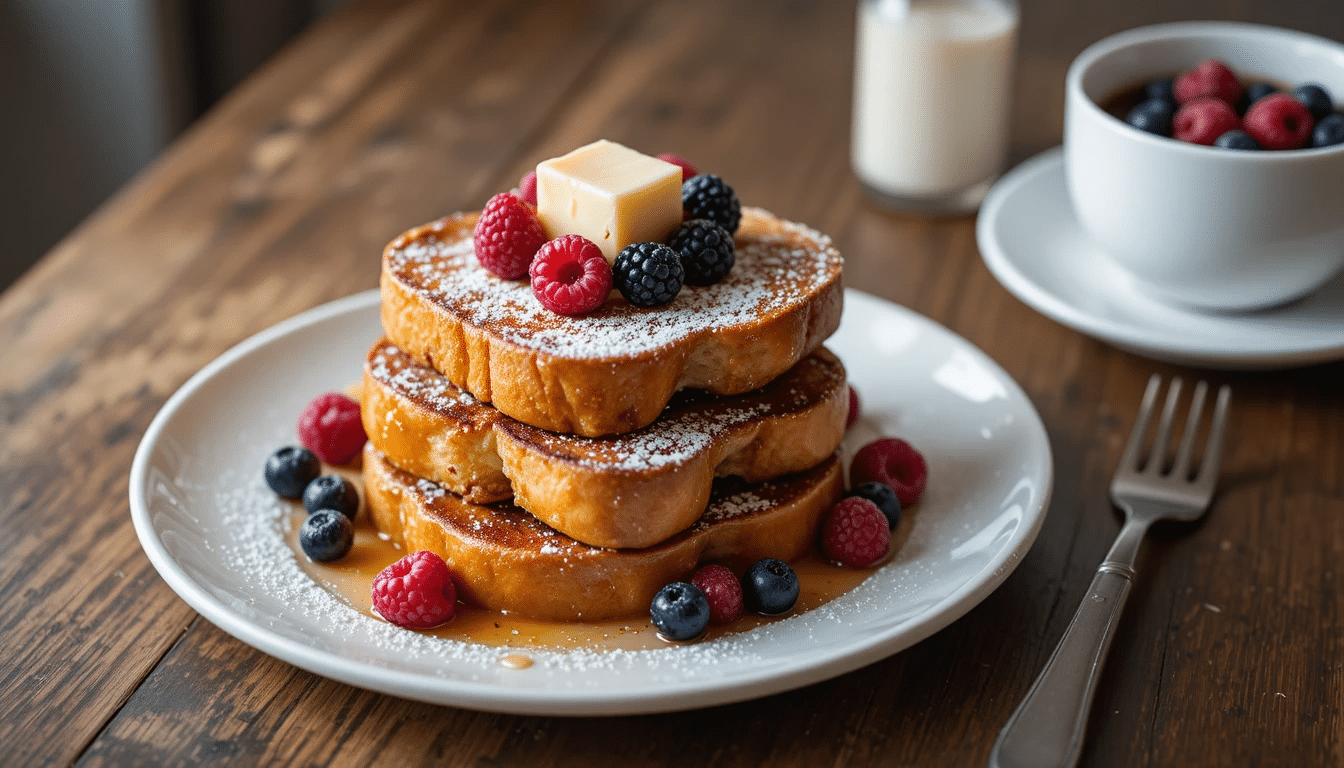
Top your French toast just before serving for maximum appeal and optimal texture. Place a small pat of vegan butter on the hot French toast and watch it melt into the surface. Dust with powdered sugar using a fine-mesh sieve for an elegant, snow-like coating. Arrange fresh berries artistically on top or alongside. Drizzle maple syrup in a zigzag or spiral pattern rather than just pouring it on – this looks more professional and prevents soggy French toast. Add any additional toppings like nuts, coconut, or whipped cream.
Step 10: Serve Immediately and Enjoy
Serve your vegan French toast while it’s still hot for the best texture contrast between crispy exterior and soft interior. Provide extra maple syrup on the side for those who want more. Fresh fruit, additional vegan butter, and powdered sugar should also be available. Encourage diners to eat promptly – French toast is at its absolute best in the first few minutes after cooking when the outside is crispiest. The perfect bite includes crispy caramelized edges, custardy interior, sweet syrup, and the freshness of fruit all in one forkful.
Ingredient Deep Dive
The choice of plant milk significantly impacts both flavor and texture in vegan French toast. Soy milk creates the richest, most custardy results due to its higher protein content (7-9g per cup compared to 1g in almond milk), which helps bind the batter and creates structure. The protein in soy milk actually mimics egg’s binding properties remarkably well. Oat milk produces sweet, creamy French toast with excellent flavor and good texture – it’s become many people’s favorite for this recipe. Almond milk works but creates lighter, less rich French toast; use it when you want a subtler flavor. Coconut milk (from a carton, not canned) adds gentle coconut flavor that pairs beautifully with tropical toppings. Full-fat versions of any plant milk create richer results than low-fat versions.
The thickening agent is crucial for replicating egg’s role. All-purpose flour creates the most neutral flavor and works reliably, thickening the batter so it clings to bread instead of just making it wet. Cornstarch produces a slightly crisper exterior and is gluten-free, making it perfect for those avoiding gluten. Chickpea flour (besan) adds protein and a subtle savory note that some people love, though it has a distinct flavor that doesn’t appeal to everyone. Arrowroot powder works similarly to cornstarch with identical results. Each thickener requires whisking well to prevent lumps – if you see lumps, strain the batter through a fine-mesh sieve before using.
Ground flaxseed serves double duty in this recipe. First, it acts as a binder, creating a gel when mixed with liquid that helps hold everything together. Second, it adds omega-3 fatty acids and fiber, boosting nutritional value. The flax creates a slightly speckled appearance in your batter, which some people find off-putting, though it doesn’t affect taste. If you prefer completely smooth batter, omit the flax and increase the flour by 1 tablespoon. Chia seeds can substitute for flax at a 1:1 ratio, creating similar binding with more visible seeds. For nut-free, soy-free, and flax-free binding, cornstarch alone works perfectly fine.
Bread selection dramatically affects the final result. Thick-sliced white bread or sourdough creates classic, custardy French toast with maximum flavor absorption. Day-old bread is ideal because it’s slightly dry and absorbs batter better without becoming soggy. French bread or challah (ensure it’s vegan) produces the most luxurious, bakery-style French toast with that perfect custardy interior. Whole grain bread works well but has a denser texture and nuttier flavor. Gluten-free bread tends to be more delicate and may require gentler handling and slightly less soaking time. Avoid very thin or very soft sandwich bread, which becomes too soggy and falls apart.
Customization Options
Flavor Variations
Transform basic vegan French toast into creative flavor experiences by adjusting the batter ingredients. For chocolate French toast, add 2 tablespoons cocoa powder and an extra tablespoon of sweetener to the batter. This creates rich, brownie-like French toast perfect with strawberries. Make pumpkin spice French toast by adding 3 tablespoons pumpkin puree and 1 teaspoon pumpkin pie spice to the batter for autumn-inspired flavors. Create lemon poppy seed French toast by adding 1 tablespoon lemon zest and 1 tablespoon poppy seeds to the batter.
For tropical French toast, use coconut milk, add ½ teaspoon coconut extract, and top with caramelized pineapple and toasted coconut flakes. Make chai-spiced French toast by steeping chai tea bags in the plant milk before making batter, or add ½ teaspoon each of cardamom, ginger, and extra cinnamon. Orange cardamom French toast features 1 tablespoon orange zest and ½ teaspoon cardamom in the batter for sophisticated, aromatic flavors. Each variation maintains the same basic technique while creating completely different taste experiences.
Savory French Toast Options
Vegan French toast isn’t limited to sweet applications. Create savory versions perfect for brunch or light dinner. Make garlic herb French toast by omitting the sweetener and vanilla, adding ½ teaspoon garlic powder, ½ teaspoon dried herbs (thyme, rosemary, or Italian seasoning), and ¼ teaspoon black pepper. Top with sautéed mushrooms, tomatoes, and fresh herbs for a savory meal.
Try chickpea flour French toast (similar to Indian pakora) by using chickpea flour as the main thickener, adding turmeric, cumin, and black pepper to the batter. This creates savory, protein-rich French toast perfect with chutney or hot sauce. Make everything bagel French toast by omitting sweet spices, adding everything bagel seasoning to the batter, and topping with vegan cream cheese, tomato, cucumber, and capers for a bagel-inspired breakfast.
Serving Suggestions
Classic vegan French toast shines with traditional accompaniments that let its flavors speak for themselves. Serve on warm plates with a generous pat of melting vegan butter, a dusting of powdered sugar, and pure maple syrup cascading down the sides. Arrange fresh berries (a mix of strawberries, blueberries, and raspberries) alongside or on top for color, nutrition, and bright flavor that cuts through the richness. This simple presentation never fails to impress and allows the French toast itself to be the star.
For special occasions or indulgent weekend brunches, elevate your presentation with gourmet touches. Create a berry compote by simmering mixed berries with a touch of maple syrup and lemon juice until they break down into a jammy sauce. Make caramelized bananas by cooking sliced bananas in vegan butter and brown sugar until golden and caramelized. Top French toast with coconut whipped cream (from chilled canned coconut cream, whipped with powdered sugar and vanilla) for luxurious richness. Drizzle with chocolate sauce, sprinkle with toasted nuts, and add a mint leaf for restaurant-quality presentation.
Build a French toast bar for brunch gatherings by setting out multiple topping options and letting guests customize their plates. Offer various syrups (maple, berry, chocolate), fresh fruits, nuts, seeds, nut butters, jams, vegan butter, and whipped cream. Provide both sweet and savory options to accommodate different preferences. This interactive setup turns breakfast into an event and ensures everyone gets exactly what they want.
Pair vegan French toast with complementary sides that round out the meal. Fresh fruit salad provides refreshing contrast and vitamins. Breakfast potatoes (roasted or hash brown style) add savory balance. Vegan sausage or bacon offers protein and satisfying savoriness. A simple green smoothie brings vegetables and nutrition to balance the indulgence. Coffee, fresh-squeezed orange juice, or herbal tea complete the breakfast experience. For brunch entertaining, mimosas (made with vegan prosecco) or Bloody Marys create a festive atmosphere.
Variations
Once you’ve mastered basic vegan French toast, creative variations keep breakfast exciting. Stuffed French toast takes indulgence to new heights – spread vegan cream cheese or nut butter between two bread slices, press edges to seal, then dip and cook as normal. The filling melts slightly during cooking, creating pockets of creamy richness throughout. Try filling with fresh berries and vegan cream cheese, peanut butter and banana, or chocolate hazelnut spread for dessert-like breakfast.
French toast sticks transform the classic into fun, portable finger food perfect for kids or parties. Cut bread into thick strips before soaking and cooking. The smaller size means quicker cooking and maximum crispy surface area. Serve with small bowls of syrup, fruit sauce, or chocolate for dipping. These work wonderfully for meal prep – make a big batch, freeze, and reheat in the toaster for quick weekday breakfasts.
Baked French toast casserole simplifies serving a crowd. Arrange soaked bread slices in a baking dish, pour any remaining batter over top, cover, and refrigerate overnight. In the morning, bake at 350°F for 35-40 minutes until golden and set. This hands-off method feeds many people simultaneously and creates soufflé-like texture. Top with streusel made from oats, flour, brown sugar, and vegan butter before baking for added decadence.
Create French toast roll-ups by flattening bread slices with a rolling pin, spreading with filling (nut butter, jam, or vegan cream cheese), rolling tightly, then dipping and cooking. The rolled shape creates beautiful spirals when sliced and offers new textural experiences. Monte Cristo-style vegan French toast sandwiches feature savory fillings like vegan cheese and deli slices between two pieces of French toast – sweet, savory, and completely satisfying.
Storage and Meal Prep
Vegan French toast is surprisingly meal-prep friendly, making busy morning breakfasts quick and easy. Cook a full batch of French toast on Sunday, let it cool completely, then store slices in airtight containers in the refrigerator for up to 4 days. Reheat individual slices in a toaster, toaster oven, or regular oven at 350°F for 5-7 minutes until crispy and hot. The toaster method works best for restoring crispiness. Avoid microwaving, which creates soggy, rubbery texture.
For longer storage, freeze cooked French toast for up to 3 months. Arrange cooled slices in a single layer on a baking sheet and freeze until solid (about 2 hours), then transfer to a freezer bag with parchment paper between slices to prevent sticking. This flash-freezing prevents slices from freezing together, allowing you to remove just what you need. Reheat from frozen in a toaster or 350°F oven for 8-10 minutes. Frozen French toast makes weekday mornings infinitely easier – just pop slices in the toaster while you get ready.
The batter can be made the night before and refrigerated in a covered bowl or jar. Whisk well before using as ingredients may settle or separate slightly. Fresh batter produces slightly better results, but pre-made batter saves precious morning minutes and works perfectly fine. Don’t store batter for more than 24 hours as the thickeners continue absorbing liquid and it becomes too thick.
For ultimate efficiency, prep multiple components in advance: make batter and refrigerate, slice bread and store in an airtight container, prepare fruit toppings, and even measure out vegan butter portions. In the morning, you simply dip, cook, and serve – gourmet breakfast in under 10 minutes. This systematic approach transforms French toast from special-occasion food to realistic weekday breakfast.
Common Mistakes to Avoid
Using Fresh, Soft Bread: The most common mistake is using bread that’s too fresh and soft. Fresh bread becomes overly soggy when soaked, sometimes falling apart in the batter or during flipping. Always use day-old bread, or dry fresh bread slightly in a 200°F oven for a few minutes. The slightly stale texture absorbs batter better while maintaining structural integrity.
Over-Soaking the Bread: Leaving bread in the batter too long creates waterlogged French toast that falls apart and has wet, gummy interiors. Soak each side for only 15-20 seconds unless using very thick, very stale bread. If your bread is breaking apart or leaving puddles of batter in the pan, you’re soaking too long. The bread should be moist throughout but still hold its shape firmly.
Cooking at Wrong Temperature: Too high heat burns the exterior before the interior cooks through, creating dark, crispy outsides with raw-tasting, cold centers. Too low heat creates pale, soggy French toast that never develops proper texture. Medium heat is essential – be patient and let the first side cook fully before flipping. Adjust heat as needed between batches.
Not Whisking the Batter Well: Lumps of flour or cornstarch in your batter create uneven coating and pockets of raw flour taste in the finished product. Whisk vigorously for at least 30 seconds until completely smooth. If you see lumps, strain the batter through a fine-mesh sieve. Let the batter rest for 5 minutes after mixing for best results.
Flipping Too Early or Too Often: Constant peeking and flipping prevents proper browning and can cause the bread to break. Cook the first side completely (3-4 minutes) without disturbing, flip once, and cook the second side. Resist the urge to flip multiple times – this isn’t a pancake. One confident flip is all you need.
Skipping the Butter or Oil: Cooking French toast in a dry pan, even with non-stick coating, prevents proper caramelization and creates sticking problems. Use vegan butter or oil between each batch, wiping away any burnt bits. That fat creates the golden, slightly crispy exterior that makes French toast irresistible.
Serving Immediately After Cooking: While French toast should be served hot, letting it sit for just 1-2 minutes allows the interior to finish setting and makes it less likely to burn your mouth. This brief rest improves texture. If serving multiple people, keep early batches warm in a low oven rather than serving some portions cold while cooking others.
Shopping Guide
Nearly all ingredients for vegan French toast are affordable pantry and refrigerator staples. Plant-based milk is the primary ingredient – buy whatever you prefer or is on sale. Oat milk and soy milk provide the best texture for French toast. A half-gallon costs $3-5 and makes enough batter for multiple batches. Store-brand plant milks work perfectly well and cost $1-2 less than name brands.
All-purpose flour or cornstarch is inexpensive and likely already in your pantry. A 5-pound bag of flour costs $3-4 and lasts for months of regular use. Cornstarch costs similarly and works just as well. Ground flaxseed adds nutrition and improves binding but isn’t essential. Buy it from the bulk section or in packages in the baking aisle. Store flaxseed in the freezer to prevent rancidity – it lasts indefinitely when frozen.
Maple syrup is the most expensive component if using real maple syrup (Grade A costs $8-15 per bottle). However, a bottle lasts for many servings. If budget is tight, pancake syrup works fine, though it lacks real maple’s complex flavor. Agave nectar provides an alternative liquid sweetener at similar prices. Vanilla extract is expensive but you only use 1 teaspoon per batch. Imitation vanilla costs less and works adequately.
For bread, buy whatever type you prefer on sale. Day-old bread from bakery discount racks works perfectly and costs significantly less than fresh bread. Some bakeries even give away day-old bread for free. A loaf typically costs $2-5 and provides 8-12 slices depending on thickness. Artisan breads like challah or brioche cost more ($5-8) but create the most luxurious French toast for special occasions.
Vegan butter is optional for topping and can be skipped to save money – just use more maple syrup. If buying vegan butter, Earth Balance, Miyoko’s, and Country Crock plant-based are popular brands costing $4-6 per container. Store brands cost less and work fine for cooking, though they may not taste as good for spreading. Fresh fruit adds cost but significantly improves nutrition and appeal. Buy whatever berries are in season and on sale, or use frozen berries (thaw and drain first).
Nutritional Information (Per Serving)
- Prep Time: 10 minutes
- Cook Time: 15 minutes (for 8 slices)
- Total Time: 25 minutes
- Servings: 4 servings (2 slices each)
- Calories: 285 kcal per serving (2 slices without toppings)
- Protein: 8g
- Carbohydrates: 48g
- Fat: 7g
- Fiber: 3g
- Sugar: 10g (from added sweetener)
- Sodium: 380mg
- Calcium: 240mg (with fortified plant milk)
- Iron: 2.5mg
- Vitamin B12: 1.2mcg (with fortified plant milk)