Quick & Easy Vegan Buddha Bowl for Busy Days
Introduction
There’s something deeply satisfying about a colorful bowl overflowing with wholesome ingredients – grains, crispy proteins, fresh vegetables, and creamy dressing all combining into one complete, nourishing meal. This quick vegan buddha bowl is your answer to those hectic weekdays when you need something healthy, filling, and incredibly delicious but have minimal time to cook. In just 30 minutes (or 10 if you meal prep), you can create a restaurant-quality bowl that’s packed with nutrients, bursting with flavors, and beautiful enough to photograph before devouring.
What makes this buddha bowl truly special is its perfect balance of textures and tastes. Fluffy quinoa provides a nutty base, crispy roasted chickpeas add satisfying crunch and protein, fresh vegetables deliver vibrant colors and vitamins, creamy avocado brings healthy fats, and tahini dressing ties everything together with rich, nutty flavor. Each component complements the others, creating a harmonious eating experience that nourishes your body while delighting your taste buds. It’s the ultimate example of how plant-based eating can be both incredibly healthy and utterly delicious.
The beauty of this recipe lies in its flexibility and convenience. Make it fresh when you have 30 minutes, or meal prep components on Sunday for 3-minute assembly all week. Customize it endlessly based on what’s in your fridge or what vegetables are in season. Add more protein, swap the grain, change the dressing – every variation is equally nutritious and delicious. Whether you’re a busy professional, a student, a parent, or anyone who values quick, healthy meals, this vegan buddha bowl will become your go-to lunch or dinner solution.
Cultural Background and Context
Buddha bowls, also known as grain bowls, macro bowls, or hippie bowls, emerged from the modern health food movement but draw inspiration from ancient eating practices. The name “buddha bowl” comes from the rounded, abundant shape resembling Buddha’s belly, symbolizing satisfaction and nourishment. Some also connect it to the Buddhist practice of carrying an alms bowl filled with whatever foods were offered that day – a mix of grains, vegetables, and proteins eaten together mindfully.
The concept of combining grains, vegetables, and proteins in one bowl has existed for centuries across various cultures. Japanese donburi bowls, Korean bibimbap, Middle Eastern grain salads, and Hawaiian poke bowls all follow similar principles of balanced, one-bowl eating. However, the specific western-style buddha bowl gained popularity in the 2010s through health-conscious cafés, Instagram food photography, and the plant-based eating movement. These colorful, photogenic bowls became symbols of healthy living and mindful eating.
The modern buddha bowl philosophy emphasizes balance, variety, and whole foods. Traditional guidelines suggest including a grain or starch (quinoa, rice, sweet potato), a protein source (beans, tofu, tempeh), plenty of colorful vegetables (raw and cooked), healthy fats (avocado, nuts, seeds), and a flavorful dressing. This combination ensures complete nutrition in every bowl while allowing endless creativity. Today’s buddha bowls represent both ancient wisdom about balanced eating and contemporary understanding of optimal nutrition, making them perfect for modern plant-based lifestyles.
Health Benefits
Complete Plant-Based Protein: This vegan buddha bowl delivers 15-18 grams of complete protein per serving through the combination of quinoa and chickpeas. Quinoa is one of the few plant foods containing all nine essential amino acids, making it a complete protein. Chickpeas add additional protein plus fiber and minerals. Together, they provide the amino acid profile your body needs for building and repairing tissues, supporting immune function, and maintaining energy levels throughout your busy day.
Rainbow Nutrition from Vegetables: The variety of colorful vegetables in this bowl ensures you’re getting a wide spectrum of vitamins, minerals, and phytonutrients. Purple cabbage contains anthocyanins that fight inflammation and support brain health. Carrots provide beta-carotene for eye health and immune function. Tomatoes offer lycopene, a powerful antioxidant. Spinach delivers iron, calcium, and folate. This rainbow approach to eating ensures you’re not missing any essential nutrients.
Heart-Healthy Fats: The avocado and tahini in this bowl provide monounsaturated and polyunsaturated fats that support cardiovascular health, reduce bad cholesterol, and help your body absorb fat-soluble vitamins (A, D, E, and K) from the vegetables. These healthy fats also support brain function, reduce inflammation, and keep you feeling satisfied for hours after eating. Unlike saturated fats from animal products, plant-based fats promote heart health rather than harming it.
Blood Sugar Stabilization: The combination of complex carbohydrates from quinoa, protein from chickpeas, fiber from vegetables, and healthy fats creates the perfect formula for stable blood sugar levels. This bowl won’t cause the energy spikes and crashes associated with simple carbs or sugary meals. Instead, it provides sustained, steady energy that keeps you focused and productive for 4-5 hours. This makes it ideal for busy professionals, students, or anyone needing reliable energy throughout the day.
Digestive Health Support: With approximately 12-15 grams of fiber per serving, this buddha bowl supports healthy digestion and regular bowel movements. The fiber feeds beneficial gut bacteria, promotes satiety, and helps eliminate toxins from your body. The combination of soluble fiber (from quinoa and avocado) and insoluble fiber (from vegetables and chickpeas) ensures optimal digestive function. This high fiber content also supports healthy weight management by keeping you fuller longer.
Anti-Inflammatory Properties: Many ingredients in this bowl have powerful anti-inflammatory properties. Tahini contains sesame lignans that reduce inflammation. Chickpeas contain polyphenols that combat oxidative stress. The variety of vegetables provides antioxidants that neutralize free radicals. Regular consumption of anti-inflammatory meals like this can help reduce chronic inflammation linked to heart disease, diabetes, arthritis, and other health conditions.
Bone-Building Nutrients: This bowl provides significant amounts of calcium from tahini and spinach, magnesium from quinoa, and vitamin K from leafy greens – all essential for bone health. The combination of these nutrients, along with adequate protein, supports strong bones and may help prevent osteoporosis. This is particularly important for those following plant-based diets who need to ensure sufficient calcium intake from non-dairy sources.
Calorie and Macronutrient Information: One complete buddha bowl contains approximately 450-550 calories depending on portion sizes and dressing amount. The macronutrient breakdown includes roughly 60-70g carbohydrates, 15-18g protein, and 18-22g healthy fats, creating a well-balanced meal that satisfies without leaving you overly full or sluggish. This makes it perfect for lunch or dinner when you need sustained energy and nutrition.
Ingredients
For the Buddha Bowl Base (Makes 2 generous servings):
Grain Base:
- 1 cup (185g) cooked quinoa (or brown rice, farro, or cauliflower rice)
- 1 cup (240g) cooked chickpeas (1 can, 15 oz, drained and rinsed)
Fresh Vegetables:
- 1 cup (90g) shredded purple cabbage
- 1 cup (30g) baby spinach or mixed greens
- ½ cup (55g) grated or shredded carrots
- ½ cup (75g) cherry tomatoes, halved
- ½ medium avocado, sliced (about 70g)
Toppings:
- 2 tablespoons sunflower seeds or pumpkin seeds
- Fresh herbs (cilantro, parsley, or mint – optional)
- Lemon wedges for serving
For Crispy Roasted Chickpeas:
- 1 can (15 oz/425g) chickpeas, drained and rinsed
- 1 tablespoon olive oil
- ½ teaspoon smoked paprika
- ½ teaspoon garlic powder
- ¼ teaspoon ground cumin
- ¼ teaspoon salt
- ⅛ teaspoon black pepper
For Tahini Dressing:
- 3 tablespoons (45ml) tahini (sesame seed paste)
- 2 tablespoons (30ml) fresh lemon juice
- 1 tablespoon (15ml) maple syrup or agave nectar
- 1 clove garlic, minced
- 2-4 tablespoons (30-60ml) water to thin
- ¼ teaspoon salt
- Pinch of black pepper
For Optional Sauce Variations:
Spicy Peanut Sauce:
- 3 tablespoons peanut butter
- 1 tablespoon soy sauce or tamari
- 1 tablespoon lime juice
- 1 teaspoon sriracha or hot sauce
- 2-3 tablespoons water
Creamy Avocado Lime:
- 1 ripe avocado
- Juice of 1 lime
- ¼ cup fresh cilantro
- 1 clove garlic
- 3 tablespoons water
- Salt to taste
Ginger Miso Dressing:
- 2 tablespoons white or yellow miso paste
- 1 tablespoon rice vinegar
- 1 teaspoon fresh grated ginger
- 1 teaspoon sesame oil
- 2-3 tablespoons water
Instructions
Step 1: Cook Your Quinoa Base
If starting from scratch, rinse ½ cup dry quinoa in a fine-mesh strainer to remove any bitterness. Combine rinsed quinoa with 1 cup water in a small pot and bring to a boil. Reduce heat to low, cover, and simmer for 15 minutes until all water is absorbed. Remove from heat and let sit covered for 5 minutes, then fluff with a fork. This yields about 1½ cups cooked quinoa. For faster preparation, use pre-cooked quinoa from the refrigerated section or microwave packets that heat in 90 seconds. Quinoa can also be cooked in advance and stored refrigerated for up to 5 days.
Step 2: Prepare Crispy Chickpeas
Preheat your oven to 400°F (200°C) or heat your air fryer to 375°F (190°C). Drain and thoroughly rinse your chickpeas, then pat them completely dry with paper towels or a clean kitchen towel. This drying step is crucial – any moisture prevents crispiness. Remove any loose skins that come off during drying. Place dried chickpeas in a bowl, drizzle with olive oil, and toss with smoked paprika, garlic powder, cumin, salt, and pepper until evenly coated. For oven method, spread chickpeas in a single layer on a parchment-lined baking sheet and roast for 20-25 minutes, shaking the pan halfway through, until golden and crispy. For air fryer, cook for 12-15 minutes, shaking the basket every 5 minutes.
Step 3: Make the Tahini Dressing
While chickpeas roast, prepare your dressing. In a small bowl, combine tahini, fresh lemon juice, maple syrup, and minced garlic. Whisk vigorously for about 30 seconds – the mixture will initially seize up and become thick, which is normal. Gradually add water one tablespoon at a time, whisking after each addition, until you achieve a smooth, pourable consistency similar to heavy cream. The dressing should be thick enough to coat the back of a spoon but thin enough to drizzle. Taste and adjust seasoning with salt and pepper. The dressing can be made up to 5 days ahead and stored refrigerated in an airtight container.
Step 4: Prep Your Fresh Vegetables
Wash all your fresh vegetables thoroughly. Finely shred the purple cabbage using a sharp knife or mandoline – aim for thin ribbons that are easy to eat. If purchasing pre-shredded cabbage from a bag, simply measure out your portion. Grate carrots using the large holes of a box grater or a food processor with the grating disc. Rinse baby spinach and spin or pat dry. Halve cherry tomatoes lengthwise. Slice your avocado just before assembling to prevent browning. Having all vegetables prepped and ready makes assembly quick and organized.
Step 5: Toast Your Seeds (Optional but Recommended)
For extra flavor and crunch, toast your sunflower or pumpkin seeds in a dry skillet over medium heat for 3-4 minutes, stirring frequently, until fragrant and lightly golden. This step intensifies their nutty flavor and creates a more satisfying crunch. Watch carefully as seeds can burn quickly. Remove from heat immediately when done and transfer to a small bowl to prevent overcooking from residual heat. This step can be done in advance and seeds stored at room temperature for several days.
Step 6: Assemble Your Buddha Bowl Artistically
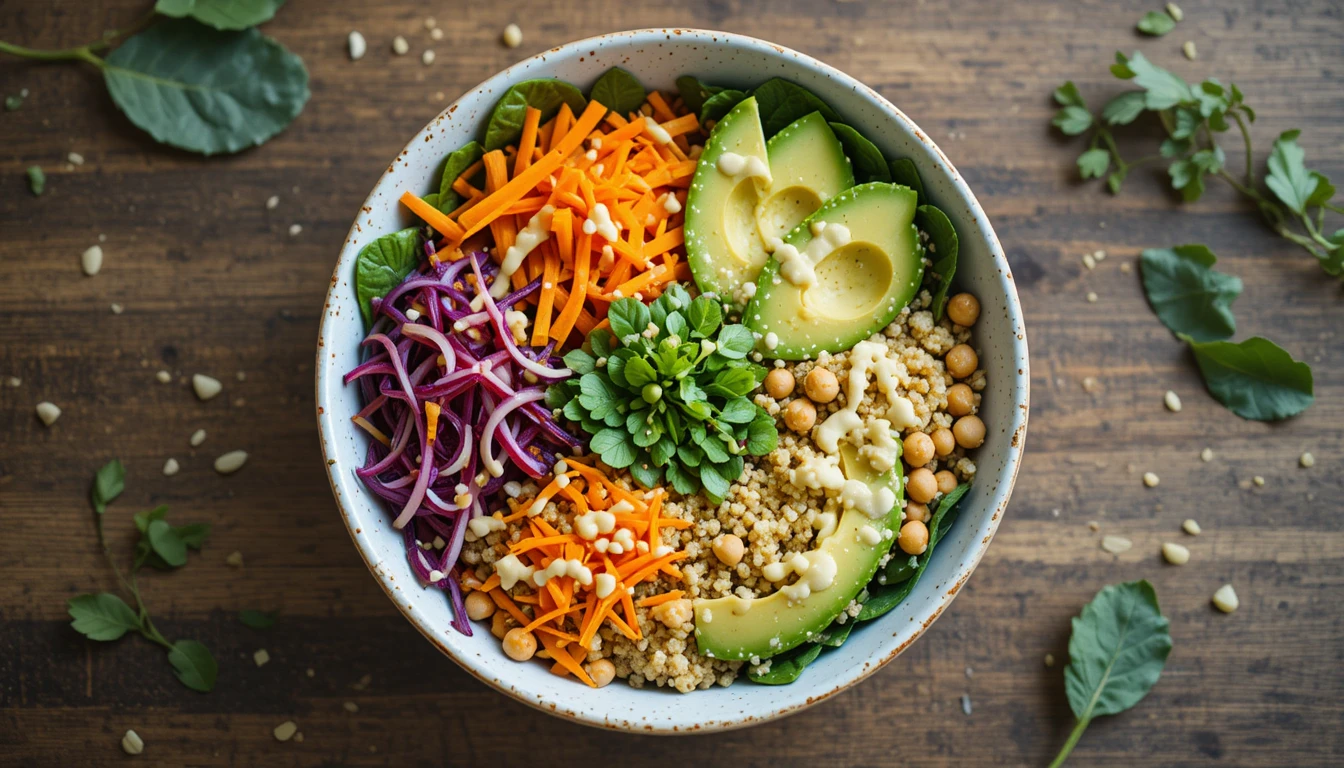
Choose a wide, shallow bowl that provides plenty of surface area for arranging ingredients attractively. Start by placing your warm quinoa as the base, spreading it across the bottom of the bowl or mounding it on one side. This is where the artistry begins – arrange your vegetables in separate sections around the bowl rather than mixing everything together. Place the purple cabbage in one section, carrots in another, spinach in a third, and tomatoes in a fourth. This creates the signature buddha bowl appearance with distinct color sections that look stunning and allow you to taste each component individually or mixed together.
Step 7: Add Your Protein and Toppings
Arrange the crispy roasted chickpeas in their own section or scatter them across the top of your bowl. Fan out your avocado slices in an attractive pattern – slightly overlapping slices create an elegant presentation. Sprinkle toasted seeds over the entire bowl for added texture and nutrition. If using fresh herbs, tear or chop them roughly and scatter on top. The contrast of colors, textures, and shapes creates a visually stunning meal that’s almost too pretty to eat – almost.
Step 8: Drizzle with Dressing
Just before eating, drizzle your tahini dressing generously over the entire bowl in a zigzag or spiral pattern. Don’t drown the bowl – you want enough dressing to flavor everything but not so much that it pools at the bottom. Place extra dressing in a small dish on the side for those who want more. The dressing should tie all the components together, providing moisture and flavor that makes every bite delicious. If meal prepping, always store dressing separately and add just before eating to keep vegetables crisp.
Step 9: Add Final Touches
Squeeze fresh lemon juice over the entire bowl for brightness that enhances all the flavors. Add a final crack of black pepper if desired. If you like heat, sprinkle with red pepper flakes or drizzle with hot sauce. For extra richness, add a few drops of toasted sesame oil. These final touches elevate the bowl from good to extraordinary, adding layers of flavor that make each bite interesting and complex.
Step 10: Enjoy Mindfully
Take a moment to appreciate the beautiful, colorful creation before you. Then dig in, either eating components separately to appreciate each flavor, or mixing everything together for a harmonious blend in every spoonful. The warm quinoa and crispy chickpeas contrast beautifully with cool, crisp vegetables. The creamy avocado and rich tahini dressing balance the fresh, bright flavors. This is mindful eating at its best – nourishing your body while truly savoring your food.
Ingredient Deep Dive
Quinoa serves as the perfect grain base for buddha bowls due to its complete protein profile, fluffy texture, and mild, slightly nutty flavor that complements any topping. White quinoa is the mildest and fluffiest, while red quinoa has a slightly nuttier taste and maintains its shape better. Black quinoa offers the earthiest flavor. Tri-color quinoa blends all three for visual appeal and varied taste. Always rinse quinoa before cooking to remove saponins, the natural coating that can taste bitter or soapy. For those who find quinoa too expensive or prefer different textures, brown rice, farro, bulgur, or even cauliflower rice make excellent substitutes.
The chickpeas in this bowl provide substantial protein, fiber, and satisfying texture when roasted until crispy. Canned chickpeas offer ultimate convenience, but cooking dried chickpeas from scratch provides better texture and costs less. To cook dried chickpeas, soak overnight, drain, then simmer in fresh water for 60-90 minutes until tender. One cup dried chickpeas yields about 3 cups cooked – enough for multiple buddha bowls. The roasting technique transforms soft, bland chickpeas into crunchy, flavorful nuggets that add both nutrition and textural interest. Proper drying before roasting is absolutely essential for achieving crispiness.
Tahini, made from ground sesame seeds, forms the base of the dressing and provides calcium, healthy fats, and distinctive nutty flavor. Quality matters significantly with tahini – some brands taste bitter while others are smooth and creamy. Look for tahini made from hulled sesame seeds for milder flavor, or unhulled for more calcium and nuttier taste. Popular quality brands include Soom, Seed + Mill, and Artisana. Store tahini in the refrigerator after opening and stir well before each use as the oil naturally separates. If your tahini tastes bitter, adding extra lemon juice and maple syrup balances the flavor.
Customization Options
Protein Variations
While chickpeas are classic, numerous protein options work beautifully in buddha bowls. Baked tofu cubes marinated in soy sauce, garlic, and ginger provide soft, savory protein with Asian-inspired flavor. Press extra-firm tofu, cube it, marinate for 30 minutes, then bake at 400°F for 25-30 minutes until golden and slightly crispy. Tempeh offers earthier, nuttier flavor with more protein and probiotics – steam it for 10 minutes to remove bitterness, then pan-fry or bake with your favorite seasonings. Edamame provides quick, no-cook protein – just thaw frozen shelled edamame and toss with salt. Black beans, white beans, or lentils offer bean variety with different flavors and textures.
Grain and Base Alternatives
Beyond quinoa, experiment with various grains and bases to change the bowl’s character entirely. Brown rice creates heartier, more substantial bowls perfect for cold weather. Farro adds chewy texture and nutty flavor while providing extra protein. Wild rice offers dramatic dark color and distinctive taste. For gluten-free options, try millet (fluffy and mild) or buckwheat groats (nutty and robust despite the misleading name – buckwheat is actually gluten-free). Cauliflower rice creates low-carb, lighter bowls that let vegetables shine. Sweet potato cubes (roasted) provide natural sweetness and creamy texture as a grain-free base. Mixed grains create textural interest and nutritional variety.
Serving Suggestions
Buddha bowls work beautifully for any meal occasion and can be adapted accordingly. For lunch, pack components separately in bento-style containers – grains and chickpeas in one compartment, vegetables in another, avocado and dressing separate to add just before eating. This prevents sogginess and keeps everything fresh and appealing. The portability makes buddha bowls perfect for office lunches, picnics, or eating in your car between appointments.
For dinner, serve buddha bowls family-style by arranging each component in separate serving bowls and letting everyone build their own custom bowl. This approach works especially well with children who may be picky – they can choose which vegetables and how much of each component they want. Provide multiple dressing options for variety. This interactive dining experience makes healthy eating fun and engaging. Pair with crusty bread, crackers, or naan for scooping up any remaining dressing and vegetables.
For special occasions or meal prep Sundays, create a buddha bowl bar with multiple grain options, various roasted vegetables, several protein choices, and an array of dressings and toppings. Label each component clearly and provide serving utensils. This setup transforms simple meal prep into an enjoyable activity, and having variety prevents bowl fatigue throughout the week. Store each component in clear, labeled containers for easy assembly. This system makes healthy eating convenient and exciting rather than boring or repetitive.
Variations
The basic buddha bowl formula is infinitely adaptable to seasons, preferences, and what’s available in your kitchen. Create a Mediterranean bowl by using farro or bulgur as the base, adding roasted red peppers, cucumber, kalamata olives, and chickpeas, topping with hummus instead of tahini dressing, and finishing with fresh parsley and lemon. Make an Asian-inspired bowl with brown rice, edamame, shredded cabbage, carrots, cucumber, and pan-fried tofu, dressed with ginger miso or spicy peanut sauce and topped with sesame seeds and scallions.
Try a Mexican-style bowl with cilantro-lime rice, black beans, roasted sweet potato, corn, tomato, avocado, and jalapeños, dressed with creamy avocado-lime sauce and topped with pepitas and cilantro. Create a fall harvest bowl with farro, roasted butternut squash, Brussels sprouts, apple slices, dried cranberries, and pecans, dressed with maple Dijon vinaigrette. Make a spring bowl with quinoa, asparagus, peas, radishes, microgreens, and herbed tahini dressing. Each seasonal variation celebrates the best produce available while maintaining the balanced buddha bowl formula.
For breakfast buddha bowls, swap savory components for breakfast items. Use oatmeal or quinoa as the base, add fresh berries, sliced banana, nuts, seeds, nut butter drizzle, and a sprinkle of cinnamon. This transforms the buddha bowl concept into a balanced breakfast that provides sustained energy. Sweet potato toast can serve as the base for avocado, hummus, sprouts, and everything bagel seasoning. The buddha bowl philosophy of balanced, colorful, nourishing meals applies equally well to breakfast as to lunch and dinner.
Storage and Meal Prep
Buddha bowls are ideal for meal prep because components store separately and assemble in minutes. Dedicate 1-2 hours on Sunday to preparing a week’s worth of buddha bowl components. Cook 3-4 cups of quinoa or rice (enough for 6-8 servings), roast 2-3 cans of chickpeas for the week, chop all vegetables and store in separate containers, and make a double batch of dressing. Store each component in airtight glass containers with labels indicating contents and preparation date.
Cooked grains last 4-5 days refrigerated and can be reheated quickly in the microwave (add a splash of water to prevent drying) or enjoyed cold. Roasted chickpeas stay crispy for 2-3 days stored at room temperature in a paper bag or container with a paper towel to absorb moisture – refrigerating makes them soft. If chickpeas lose crispiness, re-crisp in a 350°F oven for 5 minutes or in an air fryer for 3 minutes. Raw vegetables last 3-4 days when properly stored – keep shredded cabbage and carrots in containers lined with paper towels to absorb excess moisture.
For optimal freshness and texture, follow this assembly strategy: Keep dressing, avocado, and fresh herbs separate until eating. Slice avocado fresh each time to prevent browning, or store cut avocado with lemon juice squeezed over it and plastic wrap pressed directly against the surface. Assemble bowls in the morning for lunch that day, or assemble the night before without dressing for grab-and-go convenience. This meal prep system ensures you have healthy, satisfying meals ready all week with minimal daily effort.
Common Mistakes to Avoid
Overcrowding the Bowl: While buddha bowls should be abundant, overloading them makes eating awkward and unbalanced. Use appropriately sized bowls and reasonable portions of each component. A wide, shallow bowl works better than a tall, narrow one for easy access to all ingredients. Each component should be visible and accessible, creating visual appeal and functional eating.
Adding Dressing Too Early: Pre-dressed vegetables become soggy and unappetizing within hours. Always store dressing separately and add just before eating for maximum freshness and texture. This single practice dramatically improves meal-prepped buddha bowls’ quality. If you must dress in advance, add dressing only to grains and proteins, leaving vegetables undressed until eating.
Not Drying Chickpeas Properly: Wet or damp chickpeas will never achieve crispiness no matter how long you roast them. Take time to pat them thoroughly dry and even let them air dry for 10-15 minutes before roasting. Remove loose skins that come off during drying. This extra effort makes the difference between disappointing, soft chickpeas and perfectly crispy ones.
Forgetting Texture Variety: Buddha bowls need contrasting textures to be satisfying – soft grains, crispy chickpeas, crunchy vegetables, creamy avocado. If everything is the same texture, the bowl becomes boring. Always include at least one crunchy element (seeds, nuts, crispy chickpeas, or raw vegetables) and one creamy element (avocado, dressing, or hummus).
Skipping Fresh Herbs: Fresh herbs transform buddha bowls from good to exceptional. They add brightness, color, and complexity that dried herbs can’t replicate. Always finish bowls with fresh cilantro, parsley, mint, or basil. Even a small amount makes a noticeable difference in flavor and visual appeal.
Not Seasoning Individual Components: Simply salting the finished bowl isn’t enough. Season your quinoa with salt while cooking, season chickpeas before roasting, season dressing properly. Each component should taste good on its own. Properly seasoned individual components create a well-balanced, flavorful final bowl.
Making It Too Complicated: Buddha bowls should be simple and stress-free. Don’t try to include 15 different vegetables or make four different dressings. Choose 5-7 components maximum and one dressing. Simplicity ensures quick assembly and prevents decision fatigue. The best buddha bowls balance variety with ease.
Shopping Guide
Most buddha bowl ingredients are affordable staples available at any grocery store. Buy quinoa in bulk from warehouse stores, natural food stores, or the bulk bins for the best value. A 2-pound bag costing $8-12 provides enough quinoa for 15-20 bowls. Store quinoa in an airtight container in a cool, dry place for up to 2 years. Canned chickpeas are inexpensive (often under $1 per can) and convenient, or cook dried chickpeas for even more savings.
For vegetables, buy whatever is in season and on sale for the best prices and flavor. Purple cabbage lasts for weeks in the refrigerator and provides many servings of shredded cabbage. Buy carrots in bags rather than pre-shredded for savings, though pre-shredded saves time. Cherry tomatoes in clamshells or on-the-vine cost less than pre-packaged containers. Baby spinach in larger containers (16 oz) costs significantly less per ounce than small 5 oz clamshells.
Tahini is the most expensive ingredient but lasts for months and makes numerous servings of dressing. Look for it in the international aisle, natural foods section, or near peanut butter. Middle Eastern grocery stores often carry tahini at better prices than mainstream supermarkets. Quality brands like Soom or Seed + Mill cost $8-12 for a jar that makes 20+ servings of dressing. Store-brand tahini works fine if budget is tight. Buy avocados when on sale and ripen them at home for savings.
For maximum savings and nutrition, consider growing your own herbs in a windowsill garden. A small pot of cilantro, parsley, or basil costs $3-5 and provides fresh herbs for weeks with minimal care. Spinach and other leafy greens are also easy to grow in containers if you have space. This investment pays for itself quickly while ensuring you always have fresh herbs available.
Nutritional Information (Per Serving)
- Prep Time: 10 minutes
- Cook Time: 20 minutes (15 minutes for quinoa, 20-25 for chickpeas)
- Total Time: 30 minutes
- Servings: 2 generous bowls
- Calories: 485 kcal per bowl
- Protein: 16g
- Carbohydrates: 62g
- Fat: 21g
- Fiber: 14g
- Sugar: 8g (naturally occurring)
- Sodium: 420mg
- Calcium: 180mg
- Iron: 5mg
- Vitamin A: 4500 IU
- Vitamin C: 45mg