
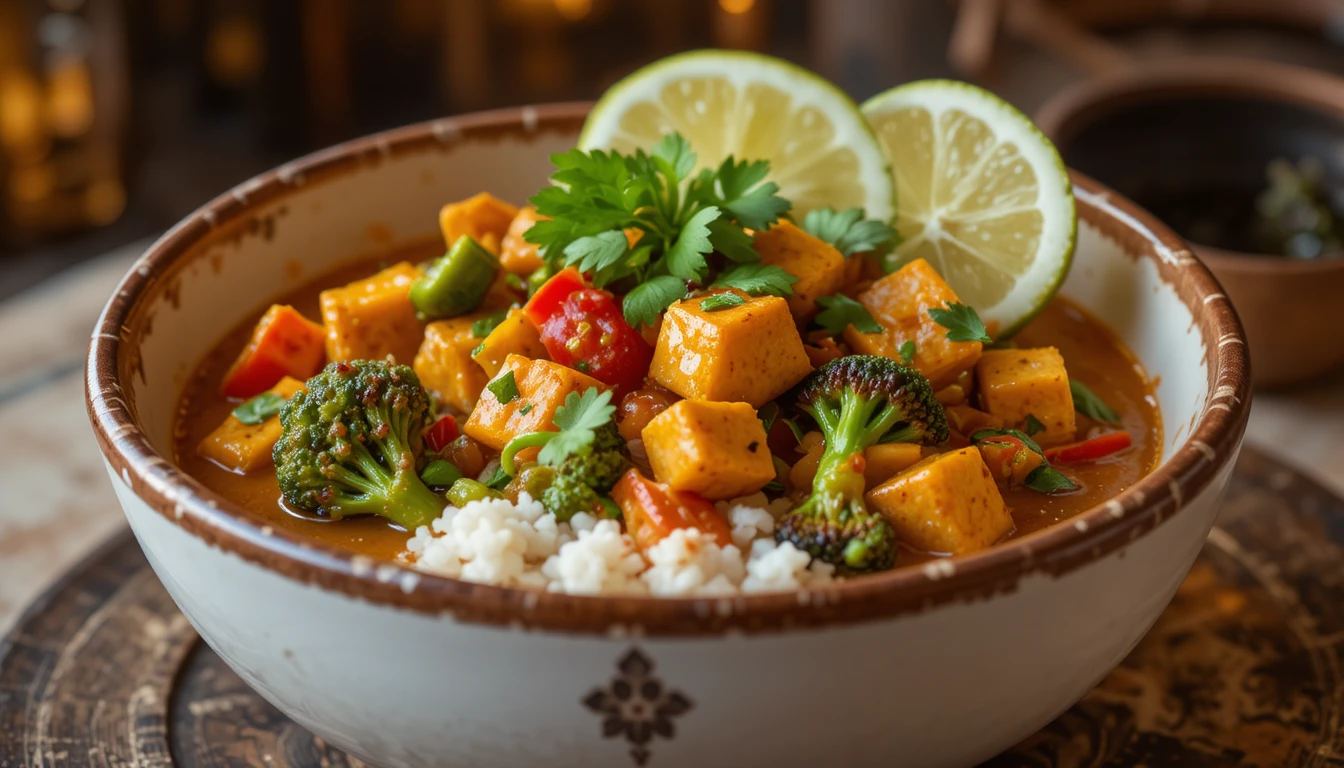
Vegan Thai Coconut Curry, An Authentic Taste of Thailand
Journey to Thailand Through This Aromatic Curry
Thai cuisine is renowned worldwide for its masterful balance of flavors: sweet, salty, sour, and spicy all dancing together in perfect harmony. This vegan Thai coconut curry captures that essence beautifully, bringing the vibrant streets of Bangkok and the tranquil beaches of Phuket right to your dinner table. The rich, creamy coconut milk base infused with aromatic Thai spices creates a dish that’s both comforting and exotic, familiar yet adventurous.
What makes Thai curry so special is the layering of flavors. Unlike many Western dishes where ingredients are added all at once, Thai cooking builds complexity through careful timing and technique. Each ingredient plays a specific role, from the fragrant lemongrass to the pungent galangal, creating a symphony of taste that’s unmistakably Thai.
Cultural Background and Flavor Context
Thai curry has a fascinating history that reflects Thailand’s position as a cultural crossroads of Asia. While curry was introduced to Thailand through Indian and Persian traders, the Thai people adapted it completely, creating something uniquely their own. Thai curries are paste-based rather than powder-based, incorporating fresh ingredients like lemongrass, galangal, and kaffir lime leaves that are indigenous to Southeast Asia.
There are several types of Thai curry, each with its own character. Red curry (Gaeng Phed) uses red chilies and is typically the spiciest. Green curry (Gaeng Khiao Wan) features green chilies and Thai basil, known for being slightly sweet. Yellow curry (Gaeng Garee) is influenced by Indian cuisine and is the mildest. This recipe uses red curry paste, but you can easily substitute based on your heat preference.
In Thai culture, food is deeply communal. Curries are typically served family-style with rice, encouraging sharing and togetherness. The dish you’re about to make isn’t just food—it’s an expression of Thai hospitality and the philosophy of achieving balance in all things.
Health Benefits of This Plant-Based Thai Curry
This vegan Thai coconut curry isn’t just delicious—it’s remarkably nutritious and offers numerous health benefits:
Anti-Inflammatory Properties: The curry paste contains turmeric, ginger, and galangal, all powerful anti-inflammatory ingredients. Regular consumption may help reduce chronic inflammation linked to various diseases.
Immune System Support: Garlic, ginger, and chilies boost immune function. Capsaicin in chilies has antimicrobial properties and may help fight infections.
Heart Health: Coconut milk contains medium-chain triglycerides (MCTs) that are metabolized differently than other fats. The vegetables provide fiber that supports cardiovascular health, and tofu offers cholesterol-free protein.
Digestive Benefits: The ginger and lemongrass in curry paste aid digestion, reduce bloating, and can help alleviate nausea. The vegetables provide prebiotics that feed beneficial gut bacteria.
Rich in Antioxidants: The colorful vegetables provide various antioxidants that protect cells from damage. Bell peppers are especially high in vitamin C, with more per serving than oranges.
Plant-Based Protein: Tofu provides all essential amino acids, making this curry a complete protein source. One serving delivers approximately 15-18 grams of protein.
Nutrient Density: This single dish provides significant amounts of vitamins A, C, K, folate, iron, calcium, and potassium—all while being relatively low in calories at approximately 350-400 per serving.
Metabolism Boost: The capsaicin in chilies has been shown to temporarily increase metabolic rate and may aid in weight management.
Ingredients
For the Curry (Serves 4):
- 1 tablespoon coconut oil or vegetable oil
- 3-4 tablespoons Thai red curry paste (adjust for heat level)
- 1 can (14 oz/400ml) full-fat coconut milk
- 1 cup vegetable broth
- 14 oz (400g) extra-firm tofu, pressed and cubed
- 1 red bell pepper, sliced
- 1 yellow or orange bell pepper, sliced
- 1 cup broccoli florets
- 1 cup snap peas or green beans
- 1 medium carrot, sliced diagonally
- 1 small bamboo shoots can (8 oz), drained (optional)
- 1/2 cup baby corn (optional)
For Seasoning:
- 2 tablespoons soy sauce or tamari
- 1 tablespoon coconut sugar or brown sugar
- 1 tablespoon lime juice (about 1/2 lime)
- 2 kaffir lime leaves (or 1 teaspoon lime zest)
- 1 stalk lemongrass, bruised (optional but recommended)
For Garnish:
- Fresh Thai basil leaves
- Fresh cilantro
- Sliced red chilies
- Lime wedges
- Crushed peanuts
For Serving:
- Jasmine rice or brown rice
- Rice noodles (for a gluten-free option)
Instructions
Step 1: Prepare Your Tofu
Press the tofu to remove excess moisture. Wrap the tofu block in paper towels or a clean kitchen towel, place something heavy on top (like a cast-iron skillet or heavy pot), and let sit for 15-20 minutes. This crucial step helps the tofu absorb the curry flavors better and creates a firmer texture. Once pressed, cut into 3/4-inch cubes. For extra flavor, you can pan-fry the tofu cubes in a little oil until golden before adding to the curry.
Step 2: Prep Your Vegetables
While the tofu is pressing, prepare all your vegetables. Thai cooking moves quickly once you start, so having everything prepped and ready (mise en place) is essential. Slice the bell peppers into strips, cut broccoli into bite-sized florets, trim snap peas, and slice carrots diagonally for that authentic Thai presentation. If using lemongrass, pound it with the back of a knife to release its aromatic oils.
Step 3: Toast the Curry Paste
Heat the coconut oil in a large wok or deep skillet over medium heat. Add the Thai red curry paste and cook, stirring constantly, for 2-3 minutes. This step is crucial—toasting the curry paste in oil “blooms” the spices, releasing their essential oils and deepening the flavors. You’ll know it’s ready when it becomes fragrant and darkens slightly. The kitchen should smell absolutely amazing at this point.
Step 4: Add the Coconut Milk
Slowly pour in about half of the coconut milk, stirring constantly to combine it with the curry paste. Let it simmer for 2-3 minutes, allowing the paste to fully dissolve and the mixture to thicken slightly. This creates the flavorful base of your curry. The oil from the coconut milk will begin to separate and rise to the surface—this is exactly what you want, as it indicates a rich, authentic curry.
Step 5: Build the Broth
Add the remaining coconut milk and vegetable broth. Stir well to combine. Add the kaffir lime leaves (tear them slightly to release more flavor) and the bruised lemongrass stalk. These aromatics are traditional in Thai cooking and provide that distinctive fragrance. Bring the mixture to a gentle simmer.
Step 6: Season the Curry
Stir in the soy sauce, coconut sugar, and lime juice. Taste the broth—it should have a balance of salty, sweet, and slightly sour flavors with a spicy kick. Adjust the seasoning if needed. Remember, Thai cuisine is all about balance. If it’s too spicy, add more coconut milk or sugar. If it lacks depth, add more soy sauce. If it needs brightness, add more lime juice.
Step 7: Cook the Vegetables
Add the harder vegetables first—carrots and broccoli. Let them simmer for 3-4 minutes until slightly tender but still crisp. Then add the bell peppers, snap peas, bamboo shoots, and baby corn. Cook for another 3-4 minutes. The vegetables should be tender-crisp, not mushy. This maintains their nutritional value and provides a pleasant textural contrast.
Step 8: Add the Tofu
Gently fold in the tofu cubes. Let them simmer in the curry for 5-7 minutes, allowing them to absorb the flavors. Be gentle when stirring to prevent the tofu from breaking apart.
Step 9: Final Adjustments
Taste and make any final seasoning adjustments. Remove the lemongrass stalk (it’s not meant to be eaten, just to flavor the curry). If you want more heat, you can add fresh sliced chilies or a drizzle of chili oil at this point.
Step 10: Serve with Style
Ladle the curry over steamed jasmine rice or rice noodles in wide bowls. Garnish generously with fresh Thai basil (this is key for authentic flavor), cilantro, sliced red chilies, and crushed peanuts. Serve with lime wedges on the side for squeezing over the curry. The fresh herbs and lime juice added at the table brighten the entire dish.
Understanding Curry Paste: Store-Bought vs. Homemade
Store-Bought Curry Paste: Convenient and authentic-tasting. Look for brands like Mae Ploy, Thai Kitchen, or Maesri. Check ingredients to ensure they’re vegan, as some contain shrimp paste or fish sauce. Store-bought paste typically lasts 6+ months refrigerated after opening.
Making Your Own: While more time-consuming, homemade curry paste offers unmatched freshness and allows you to control ingredients. You’ll need: dried red chilies, shallots, garlic, lemongrass, galangal, cilantro roots, coriander seeds, cumin seeds, white peppercorns, shrimp paste substitute (fermented soybeans or miso), and lime zest. Blend all ingredients in a food processor until a smooth paste forms.
Heat Levels: Red curry paste is typically the hottest, followed by green, then yellow. Within each color, heat levels vary by brand. Start with less paste and add more to taste.
Spice Alternatives for Milder Palates
Not everyone enjoys intense heat, and that’s perfectly fine. Here’s how to adjust:
Reduce Curry Paste: Start with just 1-2 tablespoons instead of 3-4. You’ll still get the flavor complexity without overwhelming heat.
Switch to Yellow Curry: Yellow curry paste is the mildest option and works beautifully with coconut milk.
Add More Coconut Milk: The fat in coconut milk helps tame spiciness. Add an extra 1/2 cup if needed.
Increase Sweetness: A bit more coconut sugar or a teaspoon of maple syrup balances heat perception.
Serve with Cooling Elements: Plain coconut yogurt or cucumber salad on the side provides relief between bites.
Remove Seeds: If adding fresh chilies for garnish, remove the seeds and membranes where most of the heat resides.
Serving Suggestions for an Authentic Thai Experience
Rice Selection: Jasmine rice is traditional and its slightly floral aroma complements curry beautifully. Sticky rice is also authentic. For health-conscious diners, brown jasmine rice or cauliflower rice work well.
Side Dishes: Serve your curry with traditional Thai accompaniments like cucumber salad (ajad), fresh spring rolls, Thai basil rolls, or som tam (green papaya salad) for a complete meal.
Presentation: Serve family-style in a large bowl at the center of the table with individual rice bowls. This encourages the communal eating experience central to Thai culture.
Beverage Pairings: Thai iced tea (make it vegan with coconut milk), fresh coconut water, Singha beer, or a crisp Riesling wine all pair wonderfully with curry.
Fresh Elements: Always serve with a plate of fresh herbs (Thai basil, cilantro, mint), lime wedges, and sliced chilies so diners can customize their bowls.
Customization and Variation Ideas
Protein Options: Beyond tofu, try tempeh (chewier texture), chickpeas (budget-friendly), edamame, or meat alternatives like vegan chicken strips.
Vegetable Swaps: Use what’s seasonal or available—zucchini, eggplant, butternut squash, mushrooms (especially oyster or shiitake), bok choy, or sweet potato all work beautifully.
Make It a Noodle Curry: Skip the rice and serve over rice noodles or even spaghetti for a fusion twist.
Pineapple Addition: For a sweet-savory variation, add 1 cup fresh pineapple chunks in the last few minutes of cooking. This is common in some regional Thai curries.
Greener Curry: Swap red curry paste for green and add extra Thai basil and a handful of spinach at the end.
Massaman Style: Use massaman curry paste instead of red, add cubed potatoes and roasted peanuts, and use tamarind paste for tartness.
Storage and Meal Prep Tips
Refrigeration: Store leftover curry in an airtight container for up to 4 days. The flavors actually improve overnight as they meld together.
Freezing: This curry freezes beautifully for up to 3 months. Cool completely before freezing in portion-sized containers. Thaw overnight in the refrigerator and reheat gently on the stovetop.
Reheating: Reheat slowly over low heat, adding a splash of coconut milk or broth if it’s thickened too much. Avoid boiling, which can cause the coconut milk to separate.
Meal Prep Strategy: Make the curry base on Sunday and store the cooked vegetables separately. When ready to eat, heat the curry and add fresh vegetables for better texture.
Batch Cooking: Double or triple the recipe—it takes the same amount of effort and you’ll have multiple meals ready to go.
Common Mistakes to Avoid
Using Light Coconut Milk: Full-fat coconut milk is essential for authentic flavor and creamy texture. Light versions result in watery, less flavorful curry.
Overcooking Vegetables: Add vegetables in stages based on cooking time. Nobody wants mushy vegetables.
Skipping the Curry Paste Toasting: This crucial step develops flavor depth. Don’t rush it.
Not Pressing Tofu: Unpressed tofu is waterlogged and won’t absorb the curry flavors properly.
Forgetting Fresh Herbs: The fresh Thai basil and cilantro added at the end aren’t optional—they’re transformative.
Adding All Curry Paste at Once: Start with less, taste, and add more. It’s easier to add heat than remove it.
Ingredient Shopping Guide
Most ingredients are available at regular grocery stores, but for the best selection, visit an Asian market:
Essential: Thai curry paste, coconut milk, tofu, soy sauce, basic vegetables Worth Finding: Kaffir lime leaves (dried or frozen work), Thai basil, lemongrass, galangal Substitutions: Regular basil for Thai basil (not the same but workable), lime zest for kaffir lime leaves, ginger for galangal
Prep Time: 20 minutes
Cook Time: 25 minutes
Total Time: 45 minutes
Servings: 4 generous portions
Calories per serving: 350-400 calories (without rice)